We were approached by a farm eager to build on its sustainability credentials by adding to its existing solar installation. Arnside Tower Farm was also looking to further reduce consumption from the grid.
The solar array already supports on-site consumption throughout the day, but the business wanted to explore how battery storage could further reduce costs. Due to local grid constraints, the solar array has a limited export capacity. This means the array wasn’t operating at its full potential, with valuable generation going unused.
We were approached by a farm eager to build on its sustainability credentials by adding to its existing solar installation. Arnside Tower Farm was also looking to further reduce consumption from the grid.
The solar array already supports on-site consumption throughout the day, but the business wanted to explore how battery storage could further reduce costs. Due to local grid constraints, the solar array has a limited export capacity. This means the array wasn’t operating at its full potential, with valuable generation going unused.
Having reviewed the site operation and potential of the existing solar installation, it was determined that a storage battery could provide significant contributions to energy efficiency and sustainability. Three main areas of benefit were identified:
1) The site is tied to a curtailment of export power. This means that even though the solar array can generate more than 50kW of power, it is only allowed to export a maximum of 15kW back to the grid.
2) The site is a working dairy farm which milks cows twice a day – morning and night. This means that the bulk of power consumed on the farm is used outside of the sunniest times and therefore does not coincide with the peaks of solar power generation.
3) The electricity provider provides a dual rate tariff meaning electricity consumed during certain times of the night is significantly cheaper than that supplied in the day.
As a dairy farm, the site has a continuous energy load with two clear demand peaks: morning and evening milking. During the summer months, solar generation helps offset these peaks. However in winter, shorter days mean the farm relies heavily on grid power to meet its needs.
By integrating battery storage, the farm could capture excess solar generation during the day and discharge it during those high-demand periods.
Installation
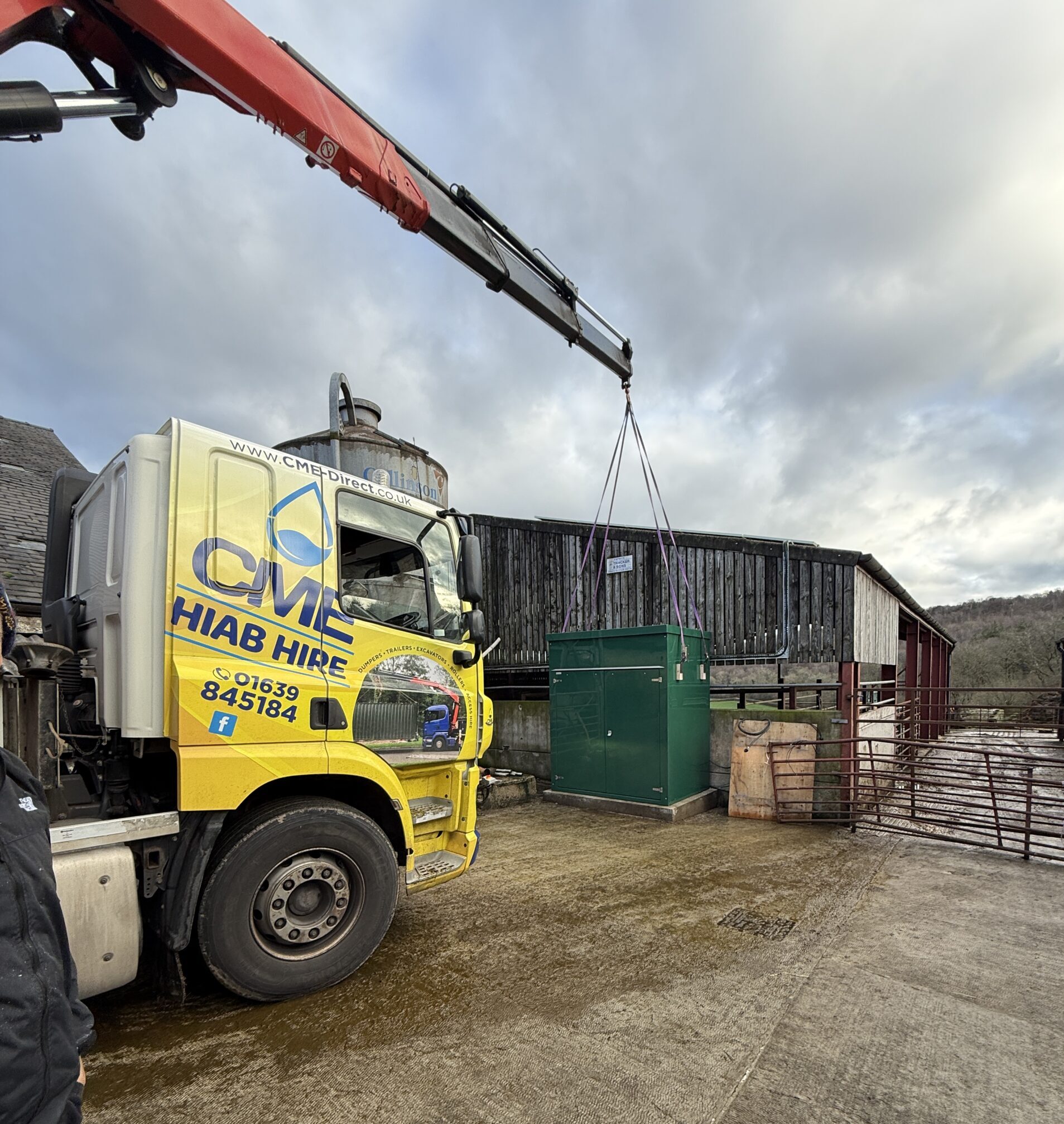
A tailored battery system was designed to store surplus energy generated by the solar array. This will significantly reduce reliance on the grid during the early evening milking. Throughout the day, the array supports the farm’s base load, with any excess generation directed into the battery. When demand peaks at milking time, stored energy is discharged first, minimising imports from the grid.
The farm also benefits from a dual-rate tariff, paying a reduced price for electricity purchased overnight. This allows the battery to be programmed to charge during off-peak hours, delivering savings of 7p/kWh compared to daytime rates. During morning milking when solar generation is unavailable, the battery supplies power to meet demand, with only the shortfall imported from the grid.
By combining solar generation with intelligent battery storage and tariff optimisation, the farm maximises renewable energy use while cutting costs and reducing grid dependency.
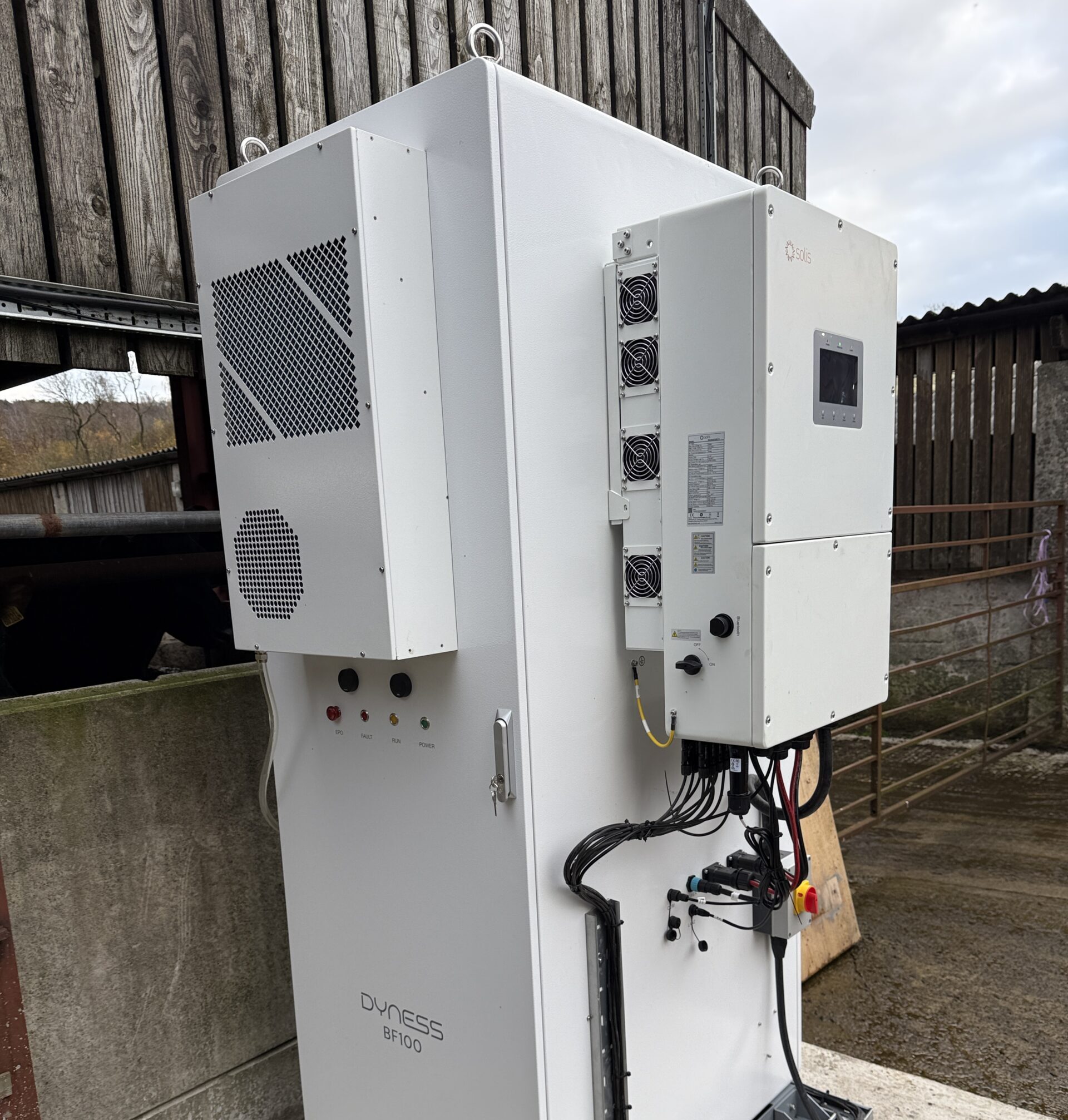
The Dyness battery system is integrated and monitored through a Solis Hybrid inverter. This seamlessly connects to the farm’s existing on-site generation. This setup provides complete visibility, allowing the farm to track in real time energy being consumed, generated, stored, and exported.
In addition, the system displays the battery’s state of charge, ensuring operators know exactly how much power is available. Remote access and maintenance capabilities further enhance reliability, giving the farm confidence that their energy system is always optimised and performing at its best.
System specification
On-site usage: 58,500kWh
Installed solar capacity: 44kW
Estimated annual generation: 38,000kWh
Installed storage capacity: 50kWh
Estimated self-sufficiency from grid: 90%
Are you interested in finding out how we can help you reap the benefits of battery installation? Get in touch with us today.