Solar PV is a great addition to any home or business. By installing solar, you are harvesting the power of the sun and producing your own green electricity. Solar installation will not only reduce your carbon footprint but also reduce your energy costs.
We’ve put together a quick guide of the solar installation process from start to finish to provide you with everything you need to know.
Design
During the design stage, your property is assessed to check suitability and establish an appropriate array size. This process includes assessment of your property, power consumption, electricity supply and budget. From a desk-based assessment, we can establish how many panels can be installed, provide an estimate of the yield and an indicative cost for installation.
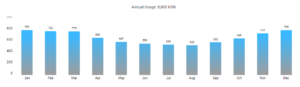
When assessing a property, some of the main things we will consider are roof orientation and slope, roof type, shading and electrical connection. These are all factors that will impact the installation and ultimately the predicted yield.
Grid Connection
Where a system exceeds 3.68kW single phase or 11.04kW three phase, a G99 application must be made to the distribution network operator (DNO) to gain permission to connect. The DNO will assess your current connection and the wider network to establish if any re-enforcement works would be required to allow the solar connection.
Planning Permission
Whilst most roof mounted systems fall under permitted development, you should always check with your local planning authority if a planning application is required. Where planning isn’t required, you may wish to obtain a permitted development certificate. For ground mount solar over 9m2, planning permission will be required. More information about solar planning permission can be found on the planning portal.
Solar Installation Process
Once all design and consents are completed, the solar installation process can begin:
Access – Suitable scaffolding and netting (where required) is installed, checked and ticketed prior to installation.
Mounting – The relevant mounting system is installed to the manufactures specification.
Panels – Once the mounting frame is complete, panels are secured using solar clamps. The panels are connected into strings on the reverse of the panels as they’re installed.
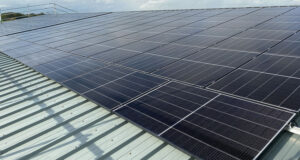
Electrical – Inverters are installed and cable strings from the panels connected.
Commission & Testing – Once all hardware is installed, the system is tested and commissioned to ensure it is working correctly.
Certification – An electrical certificate is produced along with an MCS Certificate (<50kW). The DNO is then post-notified of the installation and registered as a Small Scale Embedded Generator (SSEG).
Selling your power
Once the system is operational, excess power may be eligible for smart export guarantee (SEG) payments. The array can be registered with your energy provider or the highest bidding competitor. To register, all commissioning documents and certification will be required. These payments are often made monthly and so provide you with a revenue from your installation.
If storage is installed on site, you may be able to register for a smart tariff meaning you can sell power back to the grid during peak demand and charge your battery when rates are lower.
Monitoring
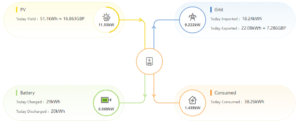
Following installation, the solar array can be monitored remotely through the inverter. These online platforms vary by manufacturer however will all provide live-data on the performance of the system.
Aftercare
Solar PV requires minimal maintenance following installation however periodic inspections are recommended. Considerations should be made for any future building works and pruning of any large foliage that may cause shading upon the roof.
Where the array is located in a particularly dusty area or close to trees, they should also be cleaned regularly to ensure they continue to generate at peak performance.
Conclusion
Solar has numerous benefits from the obvious saving on your electricity bill through to the green credentials you can boast to your friends and clients about. We understand that solar is an investment and that it’s important to know the full details before taking the leap.
A well designed, planned and installed system will provide you with a revenue stream for your home or business for years to come.
Our team are on hand to help you through this, step by step. Contact Us | Contractors | Thompsons Limited Blackpool