Our Head of Continuous Improvement Richard Smith explores how the effects of COVID have sparked a change in customer psyche and how business owners in the food and beverage, retail and hospitality sectors need to consider adapting to the new norm now to accelerate their economic recovery and protect their customer base.
As we enter our fifth week of lockdown within the UK, we are coming to terms with the realisation that the effects of this unprecedented pandemic will be lasting and, in some cases, irreversible; fundamentally changing the way we live all aspects of our lives. Although there has been huge loss of life and suffering caused by this terrible virus, we are also able to use this unique opportunity to reflect and take stock of what we really value as a society and as individuals. In this short article, we will review day-to-day acts of socialising and eating out through a new COVID-19 lens, exploring factors and expectations around ‘the new normality’ that will govern the way we will conduct our lives after lockdown.
Will the care-free approach to socialising in a packed-out pub still be possible? Will we want to dine in festival-style city centre market spaces? How will we balance our yearn for human interaction against our inherent instinct for survival and safety? Peoples’ reactions will inevitably differ; however, one thing is for certain, from landlords to shop vendors and restaurateurs, there will be a requirement to satisfy all those we interact with, that safety is paramount and that all steps have been taken to reduce the chance of contamination and infection.
Changing Perspectives
Life has fundamentally changed for all of us. We now view others with increased caution, constantly assessing the risk around us and fearful of potential exposure to a carrier of the virus. We live under a set of rules and guidance, updated daily by a wartime-like government, and take ever increasing measures to protect ourselves when outside the safety of our homes; purposefully distancing ourselves from all those outside of our own household. However, although we go about many aspects of our lives in isolation and at distance, we have seen a tectonic shift in our awareness and willingness to help those more vulnerable members of our communities and families; in some ways bringing us closer to strangers than ever before.
From meal deliveries to the elderly, to free professional trade work for key workers, we have focussed our time and efforts in a positive way. We now truly understand the value of the daily essentials that we have previously taken for granted, such as flour and toilet roll! The digital revolution has gathered pace as a result of remote working and connecting with dislocated family units, turning the most digitally inept into digital nomads.
One of the most fundamental realisations has been the beauty and value of our environment, as the bird song finally drowns out the drone of vehicle traffic. These circumstances are the here and now; but we are still in the early phases of the change curve (Fig.A), and these change events will be part of a transition and personal journey that will create new perspectives and will fundamentally affect the decisions we make in ‘the new normality’ when shopping, socialising and entertaining. Bridges (2009) in his book ‘Managing Transitions’ defines transition as ‘the human, psychological process of letting go of one pattern and engaging with a new one’. Those business owners that can draw a line under the past ways of operating ‘endings’, innovate and experiment during the ‘neutral zone’ and then shape and celebrate ‘New Beginnings’, will be the ones making the quickest economic recovery.

Reconfiguring Retail
The first example of habit change is our approach to online shopping, which has reached a record high of 22% of all retail (ONS – Apr 20) since lockdown was established in the UK on 23 Mar 2020. Although there has been significant financial hardship caused by widespread furlough and redundancy, people still have a desire to spend, to combat the boredom and feelings of suppression caused by lockdown. However, people are spending in the comfort and security of their own homes, knowing that their risk of exposure to the virus is limited to the delivery driver dropping packages at the door. It should be expected that when people are eventually able to return to Highstreet Shopping, that they will want to do so without others ‘breathing down their necks’ in a queue.
Procedures currently piloted by our supermarkets, including limiting store occupancy at entry points, marking out social distancing metrics, one-way systems within store, protected point of sale screens and hygiene stations before entry are becoming normality. As a result of these measures, both shoppers and employees are likely to expect these control measures as a baseline for returning to shopping and work. It is therefore the responsibility of the COVID conscious business owner to review infrastructure to ensure it balances speed of service against safety. Staff provisions must also be reviewed to ensure they are provided with both the PPE and the washing facilities to maintain hygiene.
Areas such as staff changing, sanitising stations and safe personal storage will be a necessity. However, it must also be acknowledged that there will be no ‘One Size Fits All’ solution to reassurance. Myers-Briggs argues there are four types of people, however, in reality there will be many more. Understanding what traits and personality key stakeholders have, will help determine what reassurance is required, or perhaps appeals to them, given their new COVID perspective. Gaining that understanding of employees could be achieved through surveys, line-manager interviews or perhaps undertaking such experiments as Myers-Briggs’s Type Indicator. Gaining an understanding of customers, whilst maintaining social distancing is more difficult, however, effective engagement through social media may just provide those early insights into the emerging behaviours and trends that the business will have to rapidly appeal to once restrictions are lifted.
Reshaping the Cornerstones of The Community – Pubs
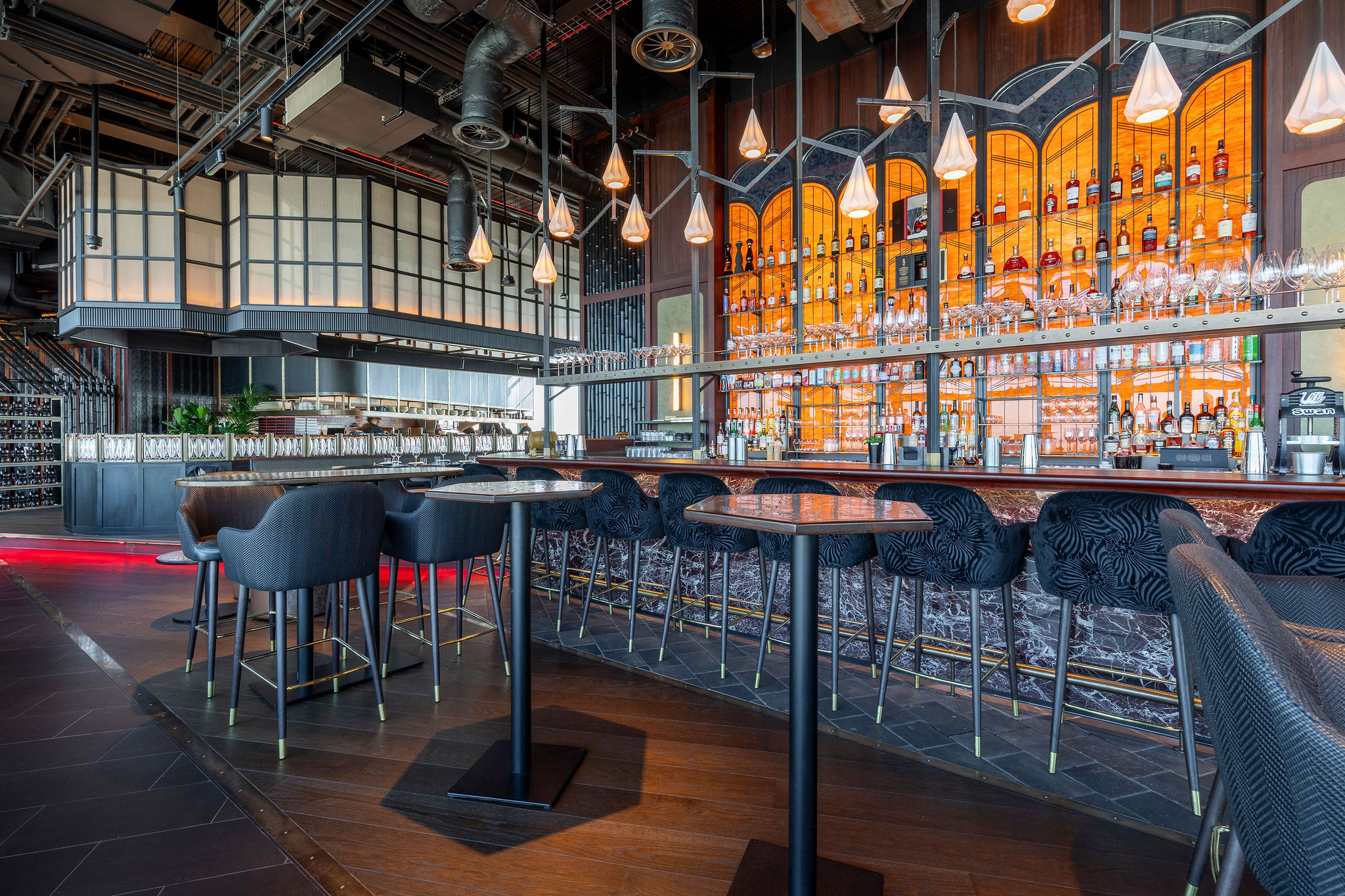
As was demonstrated on lockdown-eve, people value the liberty to socialise and drink in bars and public houses. These spaces are not simply businesses, they are the backbone of communities. The pub sector has deeply felt the effects of the lockdown and in the coming weeks may have to dispose of huge amounts of produce at significant cost, putting their businesses into further financial hardship, which will pose an increased risk of redundancy to employees. Therefore, how will those surviving businesses ensure that when doors are finally allowed to open, the flood of customers is safely controlled and increased hygiene standards maintained? The once tightly packed barstool line-up may need to be remodelled to make way for more safely segregated tables.
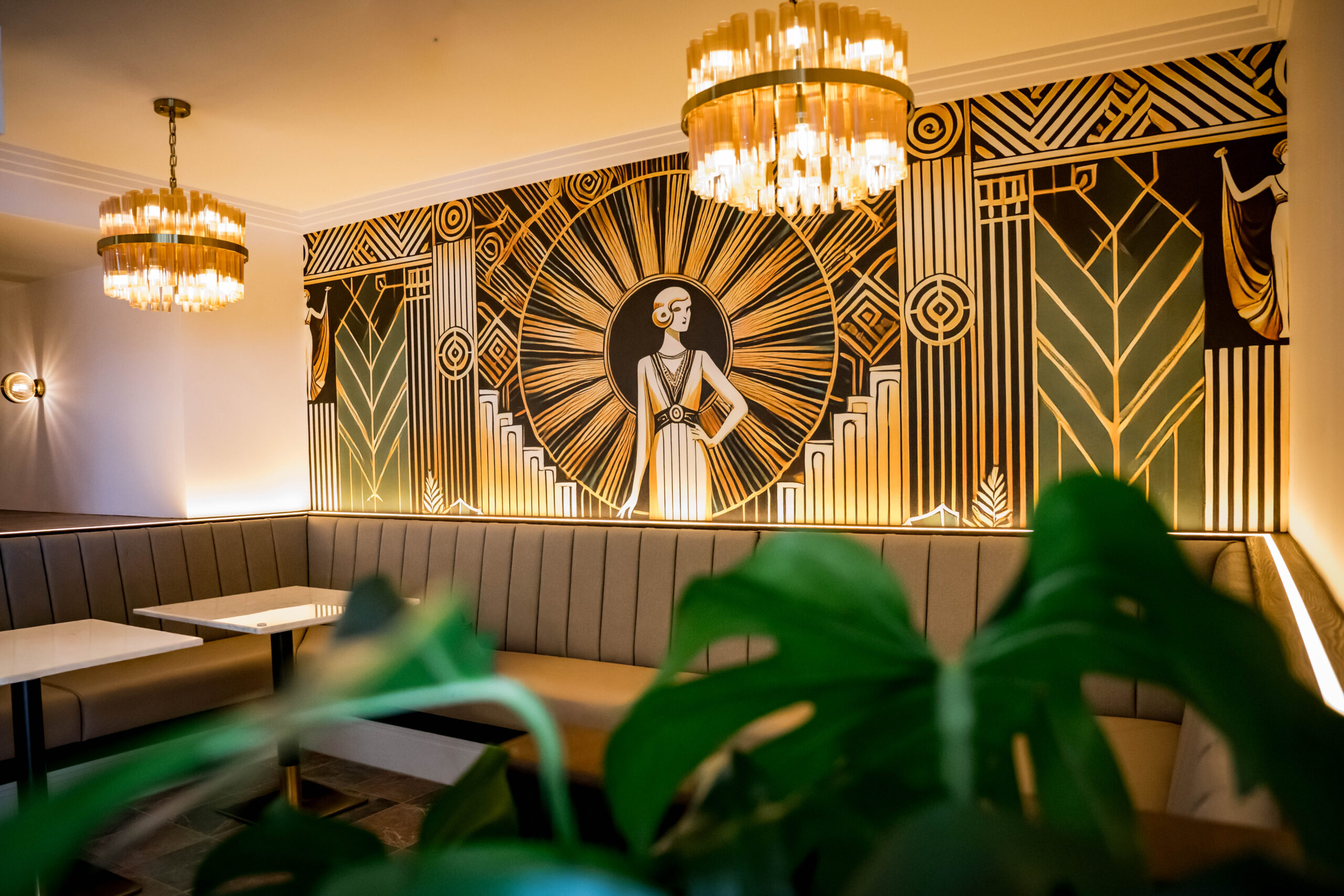
Booth seating is likely to become prime real-estate, as it provides both a physical and psychological safety barrier to others. Digital menus with table service enabling customers to peruse goods on-offer on their handheld devices from the comfort and safety of their table, could hold the key to maintaining a full venue and social distancing. The reclaimed loose furniture may need to be replaced with sleek hygienic surfaces on fixed furniture, spatially planned and positioned around social distance guidelines. Research has shown that the virus may live on a plastic or metal surface for up to 2-3 days, however perish on a copper surface after 4 hours. Therefore, the selection of materials used in venues now becomes more than just an aesthetic consideration, the ability to sanitise it will improve its suitability and appeal. Small adaptations such as moving from cloakroom areas to personal possession table storage should also be considered, as people are less likely to want their personal possessions out of their site, at increased risk of contamination.
One of the most significant adaptations that should be considered is the need to develop outdoor seating areas that allow people to enjoy their environment and socialise in their own groups at a safe distance from others. Adaptations akin to those brought on by the smoking ban will now no longer be the preserve of one societal group. Provisions such as pergolas, patio heaters and glass canopies will ensure that all customers feel comfortable and can enjoy spaces year-round. Although customers may not be making these demands right now, they will quickly vote with their feet once lockdown concludes. The ability for businesses to react rapidly will therefore be vital. Early customer engagement through social media should be started now, to explore potential adaptations, develop concepts, uncover expectations and share ideas; all of which will help ensure that customers are raring to get through the door when lockdown is lifted.
Serving up Innovation – Restaurants
Finally, we look at restaurants, who although have been deeply affected by widespread closures, have demonstrated impressive innovation and adaptation, shifting rapidly to offer takeaway services through social media and online app-based platforms. The wider digital infrastructure was arguably well setup to cope with such disruption, as the likes of Just Eat and Deliveroo are already commonplace, with major brands offering a wide variety of produce to customers in the comfort of their front rooms. Although this trend may have grown in popularity, it is unlikely to replace the yearn to dine out and have a restaurant experience with friends and family. However, the way in which we have previously gone about this unconscious process will change, and businesses must ensure customers can dine and staff can operate safely.
More visible kitchens with clean, regularly sanitised surfaces will promote transparency and give people the reassurance that behind the scenes, all measures are being taken to reduce risks. A reconfigured kitchen space may be required to enable a split business operating model that operates a take-away line for home delivery and another line for in-house customers. Adaptation to front of house areas such as creating an ice-cream counter style eat-out hatch may need to be created to enable food-on-the-go to be served by the more traditional eateries. Table sizes may need to be reduced in order to achieve a similar level of covers but with increased social distancing. Glazed screens between tables could be introduced to provide protection whilst maintaining a light airy feel. Ultimately, the space must be able to satisfy the human psyche that personal safety is not compromised in the pursuit of enabling social interaction.
Proactive NOT Reactive
COVID-19 has uniquely changed lives across the globe on a scale not previously seen in our lifetimes. The impact of it will create irreversible societal shifts, and the spaces in which we previously went about our daily business will need to rapidly adapt to compensate for these new cultural norms and expectations. It will be those businesses who accept the ‘new norm’ first, adapting their operating model and infrastructure, that will provide the essential reassurance to re-engage customers and therefore drive rapid business recovery. Those unwilling to react now and prepare for ‘the new norm’ may not only find themselves lagging behind competition, but also risk eroding valuable customer loyalty that they have previously worked so hard to develop and protect.