Solar project helps Blackpool businesses mark 30-year partnership
Posted: 7 May 2026
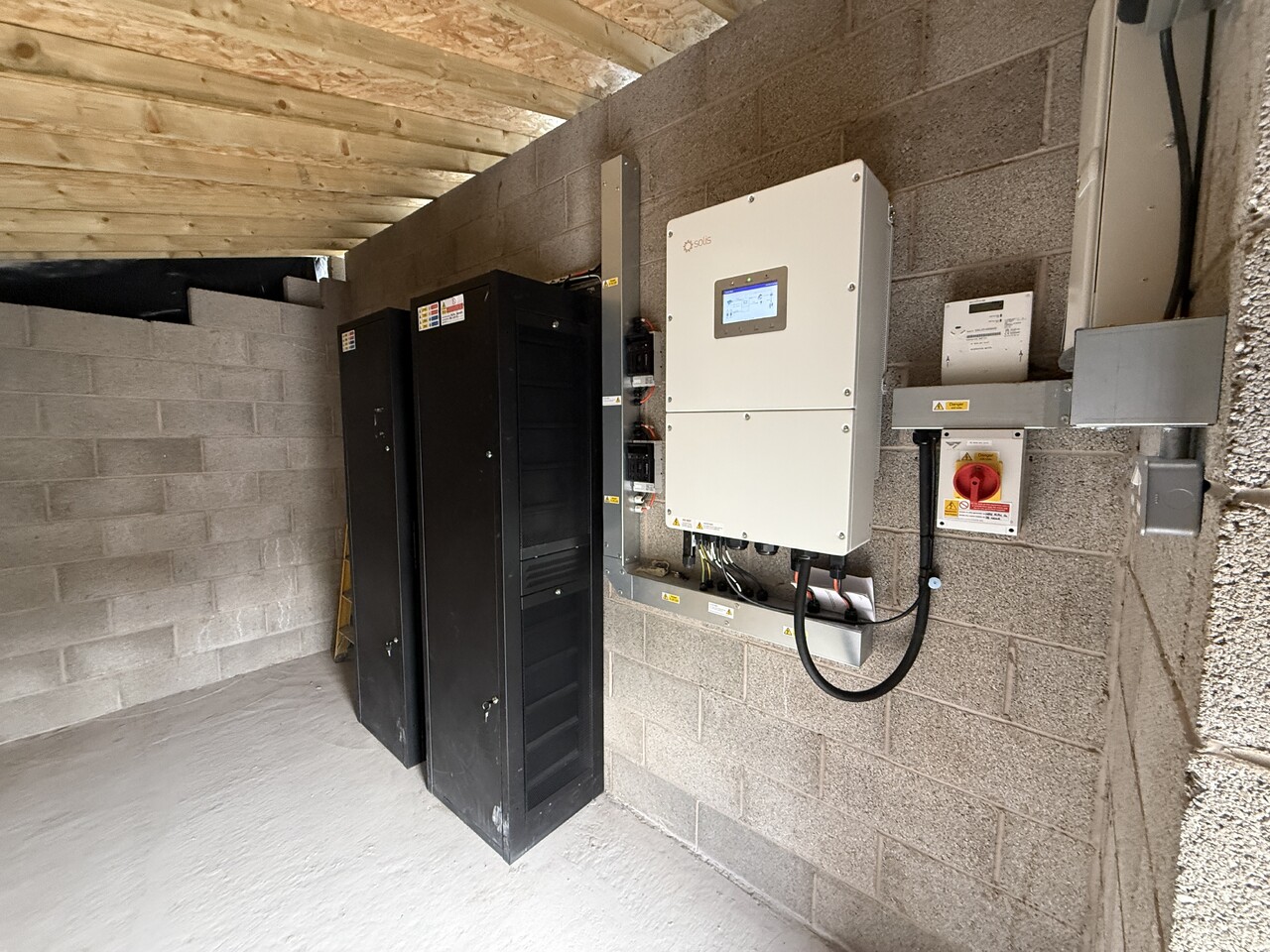
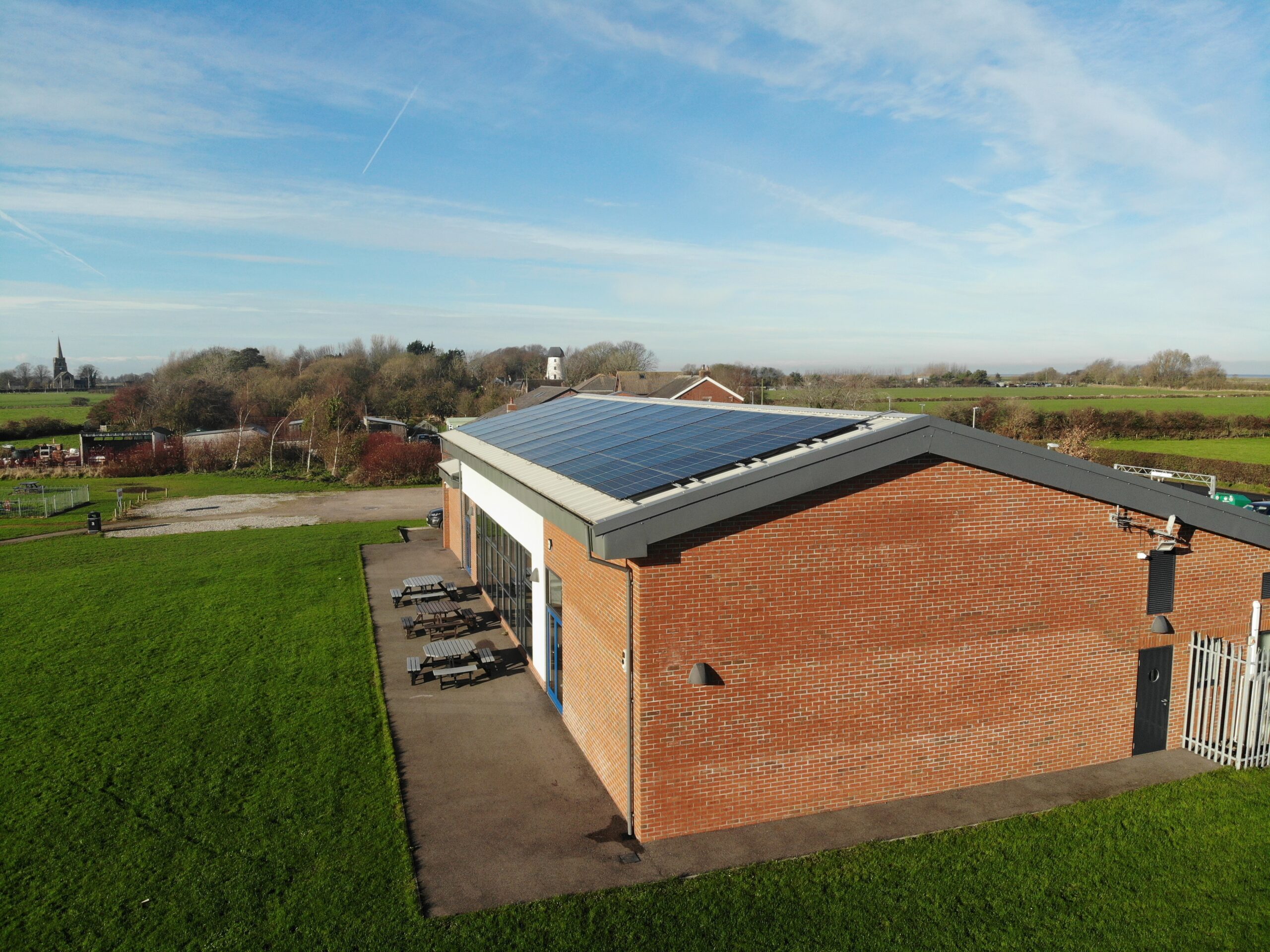
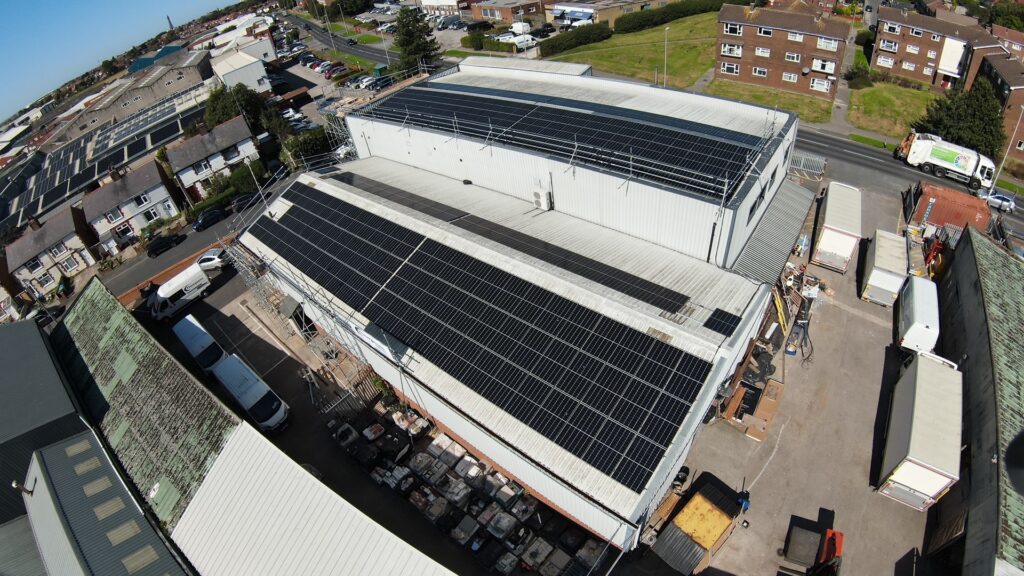
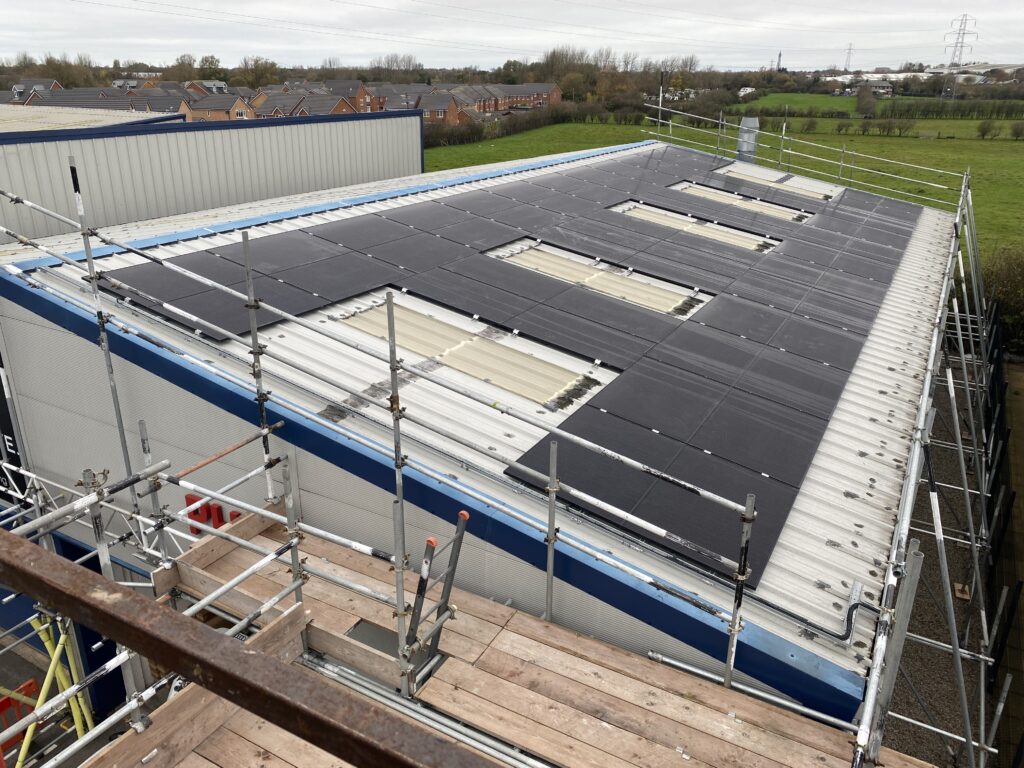
We’re proud to be marking a 30-year partnership with a fellow Blackpool business, with the milestonecoinciding with a sustainability project to helpthe companybenefit from renewable energy.
The Top Gun Group is celebrating 30 years in business
The Top Gun Group, located on the Blackpool Enterprise Zone at Blackpool Airport, is celebrating 30 years in business and has been a supplier to the Thompsons Group for the duration.
The solar installation will help the hardware provider reduce its carbon footprint and take control of its energy bills, and is anticipated to reduce the need for grid-sourced electricity by just over 50 per cent each year.
The solar installation will help the hardware provider reduce its carbon footprint and take control of its energy bills
Matthew Thompson, executive director of the Thompsons Group, said: “Our businesses go back a long way and it’s great to see our trusted supplier become our customer.
“Strong business to business relationships are invaluable – especially in the construction industry, which really benefits from the use of local supply chains. Congratulations to the Top Gun team for reaching this milestone – we look forward to many more years working together.”
Chris Smith, managing director at Top Gun Tools, said: “The system is already performing brilliantly, and we couldn’t be happier with the results. From day one, its efficiency, reliability, and seamless integration have exceeded our expectations — proving that investing in smarter, more sustainable technology truly pays off.”
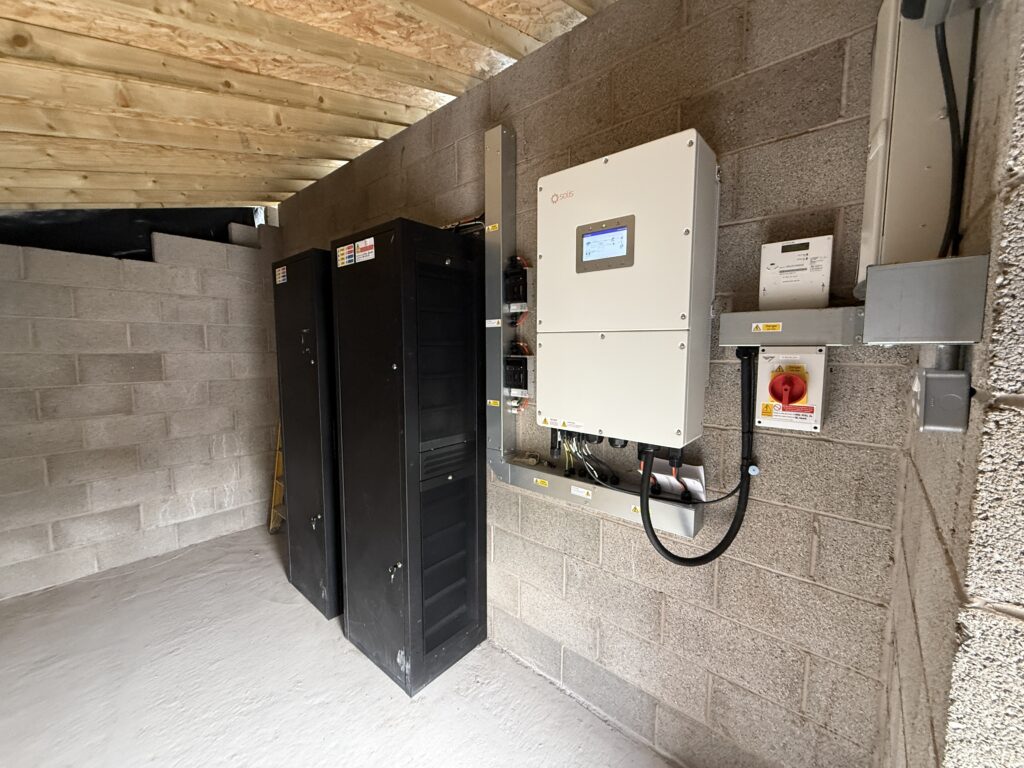
Renewable energy generation is high on the list for businesses looking to reduce their carbon footprint and energy bills. Whilst it plays a crucial role in energy security, we’re now starting to look more at how this power is used and how we can get the most from it. Introducing: battery storage.
What is battery storage?
A solar installation will produce power during daylight hours which works well for businesses with daytime working hours. But what happens when you have a 24-hour load, or night shifts? Suddenly you’re back using grid-sourced power.
With battery technology advancements, battery storage is now much more accessible and affordable for domestic and business users alike. Whether this is retrofit or installed as part of a new project, batteries offer the facility to store any excess power generated for later use.
How does battery energy storage work?
Let’s say for example, at any point your solar array is producing 100kW and your on-site load is 90kW. Without a battery, the excess 10kW would be fed back to the grid and you may be able to claim an export tariff of between 3-15p per kWh. If we spread this out over a day, you may be exporting around 400kWh. At a rate of 5p/kWh, this would bring you a revenue of £20 per day. Great news – you’re making money from solar.
But what happens if you add a battery? If that 400kWh is kept for use later in the day when it’s dark outside, and you’re currently paying 26p to purchase power, that’s a saving of £104; an extra £84 in your pocket per day.
In addition, there’s also the option for energy arbitrage.
What is energy arbitrage?
Energy arbitrage is where a business has a contractual agreement with its energy provider allowing it to purchase and sell energy at differential rates, depending on the demand. Time of use (TOU) tariffs also provide the potential for improving return on investment (ROI) by enabling the business to chatge the battery during low tariff periods, for use at high tariff periods.
I can’t have solar installed – can I have battery storage?
Yes – though battery storage works seamlessly with solar, it can also work independently as a standalone system. Buying electricity from the grid at a cheaper rate to charge the battery can represent substantial savings. Similarly to the example above, using an energy management system (EMS), you can track energy rates and set the battery to charge during lower rate times. This not only gives you greater control of costs, but also provides energy stability.
Installation of a battery can also assist with peak shaving to support businesses with high peak consumption. For example, a manufacturing business with machinery that has a high load for short time periods.
More businesses are starting to understand the vast benefits of switching to renewable energy. Speak to our team of experts today if you’d like more information, or to take the next steps towards reducing energy bills, lowering your carbon footprint and securing greater energy independence.
A year of solar – calculating our client’s financial and carbon savings
Posted: 26 November 2025
In 2024, we were approached by Pilling Village Hall to design and install a solar PV system. The enquiry came following a restoration project, where measures were taken to reduce the hall’s carbon footprint and reduce energy bills.
Now, one year post-installation, we caught up with our client Mike O’Loughlin, Treasurer at Pilling Village Hall, to find out about the real impact of switching to solar energy.
What was your reason for installing solar PV?
‘A couple of reasons; firstly to improve our environmental impact, and also to reduce our exposure to fluctuating energy prices over the short and long-term.’
How did you find the installation process?
‘Very efficient, and the communication was great at all stages. The installation team was respectful of the hall premises and carried out the work on time and to the agreed schedules.’
What has been the main benefit of installing solar?
‘The reduction in our ongoing energy costs. Since installation, we have saved around £2,500!
‘In addition, we can receive payment for surplus energy exported, although payments are low compared to what we pay for imported electricity and subject to change without notice. To date we have received £1,191.24 in payment for exported electricity from Scottish Power, but their payment rate has recently dropped from 12p per kWh to 6p.
‘At the point of installation, the system was predicted to generate approximately 18,374kWh per annum. In reality, it has produced almost 23,000kWh – which is fantastic and apparently the equivalent of planting 47 trees.’
Would you recommend solar energy to others?
‘Yes. The installation was completed to our complete satisfaction, and the annual financial savings should see the capital outlay recovered within six to seven years, which is great to know.’
Do you have any advice for anyone looking to install solar PV?
‘Ensure you use an established installer with a good track record. Thompsons Solar certainly fitted these requirements. Also, make sure you research the market for export tariffs in detail. Despite what the government says about the process, it is not always straightforward, and the power companies taking exported electricity have different qualification criteria and tariffs. You need to negotiate your import and export tariff at the same time.
‘For commercial premises, check with your building insurance provider to ensure the specification, in particular roof load and emergency safety electricity cut-off of the solar panel installations, meets the insurance company criteria.’
Thanks to Mike for taking the time to share feedback on his experience of switching to solar energy.
Here are our top three takeaways:
Do your research on export tariffs to make sure you get the best deal for surplus energy generated
Look for an experienced installation company with a good reputation
Check with your building insurance provider ahead of works beginning
If you’d like to reap the benefits of solar energy too, get in touch with our team of experts today to find out more.
Autumn is underway and a favourite season of many – with Halloween, bonfire night, Diwali and the lead up to Christmas a few of the calendar highlights. But ‘cosy season’ also brings cooler weather and darker days – both of which can sometimes make sustainable practices fall by the wayside, amidst the temptation to crank up the heating.
So here are our tips for making sure Autumn is a sustainable season – in the workplace, and at home!
Energy
Starting off with an easy one – turn off lights when leaving a room! Wherever possible, install motion sensors to automatically turn off lights that aren’t being used.
Don’t leave electrical items on stand-by – turn them off. While saving only a small amount of power, every little helps.
By using radiator thermostats and reducing the temperature on your boiler, you can reduce your energy usage and your bill.
If you haven’t already, look at renewable energy sources such as solar or wind. A recent study showed that solar power has been the largest source of new electricity globally for the third consecutive year!
Consider buying power on a renewable energy tariff; some or all of the units of electricity are matched by units generated by a renewable source.
Waste
Do you really need to print that document? Consider using digital versions where possible and only print when necessary.
Could you bring your lunch to work in a re-usable container? Making your lunch instead of buying something plastic wrapped is not only better for the planet but your pocket too! Try and plan meals where possible to reduce waste.
Re-use, re-purpose, recycle – think before you throw. Can you use it again? Can you use it for another purpose? If not, can it be recycled?
Although buying second hand isn’t everyone’s cup of tea, it gives products a longer life before landfill. This goes for the home and office. If having a re-vamp, why not try up-cycled office furniture?
Shop smart – opt for glass or cardboard packaging over plastic where possible as they’re easier to recycle. How many of your office supplies are recyclable?
Environment
Think about walking or cycling for shorter journeys. This helps the environment as well as your wellbeing! Don’t forget your wellies for the puddles!
Consider draught excluders to avoid having to turn up the heating.
Try opting for manufacturers and suppliers who use sustainably sourced materials. This could be the copy paper you purchase being FSC approved, to health and wellbeing products containing sustainably sourced palm oil. If you could help save the orangutans and their homes, why wouldn’t you?!
Birds find it harder to find food at this time of year. Why not leave out some fat balls or seeds to make things a little easier through them during the Winter?
When it comes to sustainability, a few small changes can have a big impact.
For more advice on how your business can become more sustainable all year round, get in touch with our solar experts today.
Lancashire farm reaps benefits of solar and storage installation
Posted: 8 October 2025
Thompsons Solar has helped a Lancashire farm to boost its renewable energy set-up, resulting in a reduction of both its energy bills and carbon emissions.
Sough Pits Farm, a rural livery situated in Blackburn, asked our team to design a system that would incorporate its existing on-site renewables, add additional generation and provide battery storage for excess power generated.
The farm has a high energy use, which was partially covered by the power generated by its existing small scale wind turbine. As a result, the client was looking for a way to maximise generation on site to cover as much of their energy consumption as possible. In addition to this, they wanted the ability to store excess power for use when neither technology was generating.
A suitably sized battery storage system was included in the design which works with both the wind and solar installations to ensure maximum use on site. Any surplus power generated is then exported to the grid.
The system designed ticked all these boxes, giving the client a much greater independence from grid-sourced power.
Technical information
Electrical consumption Prior to Solar installation: 67,000kW Hrs PA
Installed Solar Capacity: 42.4kW
Installed Storage Capacity: 85.2kWh
Projected yield from installed solar: 35,633kW hr PA
Net Rate of return on investment: 18.7%
System Performance warranties (manufacturer): 25yr
The system was commissioned in May 2025, and the business is already seeing huge reductions on its electricity bills. Remote monitoring enables the system to be checked to ensure it is performing correctly over the lifetime of the installation.
The system is predicted to payback in just over six years which equates to just under a 19% ROI. In addition to the financial aspect, the business has significantly reduced its carbon emissions.
Client feedback
I’m really pleased with the service I’ve received from the Thompsons Solar team. Jon took time to discuss battery storage with me and explain what my options were. Once a system had been agreed, they took care of everything and made sure they didn’t interfere with my business activities during the install. Since installation, they’ve helped me understand my export and offered advice on how to best manage my power.
L Green, owner
Want to power up your business with solar and achieve your green business goals? Get in touch with our team of experts today.
Net zero is a hot topicat the moment, with companies across all industries under increasing pressure to reduce their carbon footprints. While there are a range of ways to work towards this goal, oneeffective method is to create a carbon budget.
What is a carbon budget?
A carbon budget is the maximum amount of greenhouse gases (GHGs) a company can emit over a specific period. The government sets one, so it makes sense for businesses to do the same. This strategic approach helps organisations set, track and achieve emissions reduction targets in line with their net zero goals.
Think of it like a financial budget; just as companies allocate money to different departments, a carbon budget allocates emissions across business units, projects, or operations. The goal is to stay within the ’emissions allowance’ while continuing to grow – sustainably.
The benefits of a carbon budget
Climate accountability: It provides a clear framework for aligning corporate actions with science-based climate targets.
Risk management: Helps identify carbon-intensive operations and mitigate regulatory, reputational and financial risks.
Customer confidence: Demonstrates a proactive approach to sustainability, which is increasingly valued by customers.
Operational efficiency: Encourages innovation and efficiency by spotlighting areas where emissions (and often costs) can be reduced.
How to implement a carbon budget
When creating a budget, it’s important to make sure it’s realistic. Here’s a step-by-step guide to building a carbon budget within your company:
1. Measure your baseline emissions
Start with a comprehensive GHG inventory, which should cover:
Direct emissions (e.g., company vehicles, on-site fuel use)
Indirect emissions from purchased electricity
All other indirect emissions (e.g., supply chain, business travel)
This might seem daunting, but many companies offer this service, as well as funded training available should you wish to do it in-house. Check with your local council to see what’s on offer.
2. Set your carbon targets
These can be set internally based on your company’s own carbon goals or by using frameworks like the Science Based Targets initiative (SBTi) to define emissions reduction goals that align with climate science.
3. Allocate the budget
Distribute the total emissions allowance across departments or business units. This can be based on historical emissions, revenue or operational size and activities.
For example, for a manufacturing facility, the production line may have a greater allowance than the office due to a much greater energy demand.
4. Integrate into decision-making
Incorporate carbon costs into project planning, procurement and investment decisions. Could you amend your supply chain to improve your carbon savings? Or maybe better manage transport and deliveries for an upcoming project? Or better still, invest in solar and storage to take control of your carbon emissions through energy generation.
5. Monitor and report progress
Track emissions periodically and adjust strategies as needed. Transparent reporting builds trust and accountability. Make sure everyone involved knows the impact they are having.
Engaging employees in carbon budgeting
For carbon budgeting to truly be successful, employee engagement is crucial. But there are many practical ways to bring your team on board:
1. Make it personal
Help employees understand how their daily actions impact the company’s carbon footprint. This can include commuting, energy use and business travel. Use relatable examples and encourage reflection.
2. Create green champions
Identify and empower sustainability ambassadors across departments to lead initiatives, share knowledge and inspire others. Green leaders are team leaders!
3. Gamify the process
Introduce challenges, leaderboards or rewards for teams that reduce emissions or suggest innovative low-carbon solutions. If using rewards, why not make them low carbon to further push the sustainability message?
4. Offer training and resources
Provide workshops, webinars and toolkits to educate staff on carbon budgeting, climate science and sustainable practices. There are many free online resources available and companies who specialise in delivering training. Carbon Literacy training is a great way to educate your team with a better understanding of carbon.
5. Celebrate successes
Recognise milestones. Whether it’s a department hitting its carbon target or an employee-led initiative that made a difference, be sure to shout about it.
6. Encourage bottom-up ideas
Have a suggestions box for sustainability improvements or an easy process of communication. Often, the best ideas come from those closest to the work!
Working together towards a low-carbon world
Carbon budgeting isn’t just about ticking boxes, it’s a smart way to drive innovation, build resilience, and lead in a low-carbon world. As rules get stricter and expectations grow, companies that make carbon budgeting part of their everyday operations and get their teams involved will be in a much better position to succeed.
Contact our team for more information on how your company can work towards a greener, more sustainable future.
A year of solar: how clean energy has impacted our business
Posted: 6 August 2025
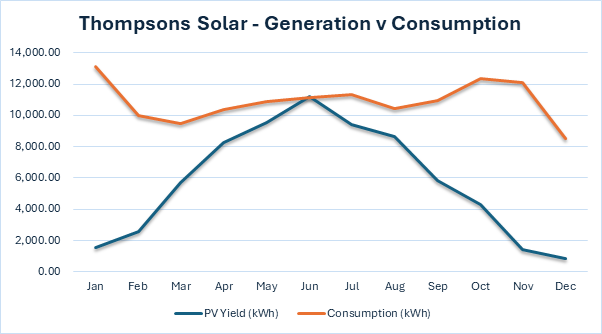
At Thompsons we proudly practice what we preach. To show that we believe in what we sell, we invested in a solar array at our Blackpool HQ back in 2023. Now that the installation has been up and running for well over a year, we wanted to share our data, showing a snapshot of generation, financial and the carbon benefits for 2024 from switching to clean energy.
This is an honest, true reflection of our generation and savings, showing how solar has benefitted our business.
The solar installation at Thompsons HQ
On-site usage
Through online monitoring, we’re able to see exactly how our system is performing. When installed, the system was set up to monitor not just the solar generation but also the amount of power used on site and exported, providing us with a clear view of our requirements.
The below figures are taken from our monitoring for the calendar year of 2024.
Grid-sourced power
Annual grid sourced power before solar: 130,604kWh
Annual grid sourced power after solar: 86,808kWh
Solar generation
Predicted output: 63,345kWh | Actual output: 69,265kWh
Over generation: 5,920kWh | Exported to the grid: 25,469kWh
Generated power utilised on site: 43,796kWh
Saving on electricity bill: 43,796kWh / £11,167.98
Revenue from export: 25,469kWh / £3,820.35
Annual saving/revenue: £14,988.33
Significant carbon savings
In addition to the financial benefits of the system, we’re also directly reducing our carbon emissions.
Tonnes of carbon saved through generation used on site: 43,796kWh x 0.20707kgCO2e** = 9068.84kg
Equivalent trees planted: 9,068.84 x 0.00998 trees = 90 trees
**Figures taken from Carbon Trust Conversion Factors document updated 2023.
With an expected minimum lifespan of 20 years, the total CO2 saving is expected to be 181.38 tonnes, the equivalent of 1,777 trees planted – that’s a small forest!
A clean, green future
We are committed to operating as a responsible and sustainable business, while supporting our clients to do the same. It’s why we worked with theBlackpool Net Zero Academy to identify further ways in which carbon savings could be made within the company. An assessment was conducted with several recommendations made, one of which was the installation of motion sensors on office lights. These sensors were installed in early 2025 with grant funding provided by the academy. Each year, this single improvement is set to save 1,739kWh of energy per annum.
For more information about Thompsons’ sustainability journey, or to find out how we can support your business to reap the benefits from switching to clean energy, get in touch with our team of experts here.
How solar energy can help businesses achieve net zero goals
Posted: 18 July 2025
As the global push for sustainability intensifies, more businesses are committing to net zero emissions targets. Achieving these goals requires a strategic shift in how companies consume and produce energy. One of the most impactful and accessible solutions? Commercial solar power.
What does net zero actually mean for businesses?
Net zero means balancing the amount of greenhouse gases emitted with the amount removed from the atmosphere. For businesses, this involves reducing emissions across operations, supply chains, and energy use – while offsetting any remaining emissions through carbon credits or other means.
Why solar energy is key to net-zero strategies
Solar energy plays a pivotal role in helping businesses reduce their carbon footprint. Here’s why:
1. Clean, renewable power
Solar panels generate electricity without emitting carbon dioxide or other harmful pollutants. By switching to solar, businesses can significantly cut their reliance on fossil fuels.
2. Energy independence
Installing solar panels allows companies to produce their own electricity, reducing dependence on the grid and insulating against energy price volatility.
3. Scalable solutions
Whether you’re a small business or a multinational corporation, solar systems can be scaled to meet your energy needs – making it a flexible solution for net-zero planning.
4. Supports ESG goals
Environmental, Social, and Governance (ESG) metrics are increasingly important to investors and stakeholders. Solar adoption demonstrates a tangible commitment to environmental responsibility.
The financial benefits of going solar
Beyond sustainability, solar offers compelling financial incentives:
Lower energy bills over time
Tax credits and government incentives
Increased property value
Attractive ROI with payback periods often under 10 years
How to integrate solar into your net zero plan
Conduct an energy audit to understand your current usage. You can do this in-house or work with an external auditor. Depending on your geographic location, funded options may be available. For example in Blackpool, this is offered by Net Zero Business Academy – Blackpool Unlimited and in the wider Lancashire area, Chamber Low Carbon.
Set clear emissions reduction targets and stick to them!Big or small, set a goal.
Seek advice from a solar expert to get a full understanding of how the system works and how it can benefit your business. The internet is a wonderful thing however unfortunately there is a lot of contradicting information regarding solar. Having a conversation with a professional can answer all your questions and arm you with the information you need.
Explore financing options like PPAs or asset financing. If you aren’t in a position to put the capitol upfront, there are other options available.
Get your landlord onboard if your property is rented. They can benefit from a fixed income and return on investment whilst you benefit from reduced energy costs and environmental credentials.
Monitor and report progress to stakeholders. If you’re going to take the time to invest in solar, take note of its impact on your business and shout about it!
Solar energy isn’t just a smart environmental choice – it’s a strategic business decision. As the world moves toward a low-carbon future, companies that embrace solar now will be better positioned to meet regulatory requirements, attract eco-conscious customers, and achieve long-term sustainability.
Ready to take the next step toward net zero? Talk to a member of our solar team for a chat about how it can impact your business.
Commercial solar panel installation – what are the financial benefits for businesses?
Posted: 1 July 2025
Let’s talk money! As energy costs continue to rise and environmental concerns grow, more businesses are turning to commercial solar energy – not just for sustainability, but for the significant financial advantages it offers. Whether you’re looking to cut monthly outgoings, increase your green credentials, or secure long-term savings, solar power is a smart investment.
Saving money on business energy bills
Usually the most significant factor in businesses choosing commercial solar is the impact that solar energy has on electricity costs. Where power generated on site is utilised on site, there is an instant saving on your energy bill. Power that you may usually have paid 35p/kWh for has now cost you nothing. If you use 1,000kWh of solar power, that’s a £350 saving straight away! Over a year, this saving is significant, especially if you’re a particularly high energy user.
Tip: Maximise your savings. Is there anything you can do during daylight hours that you’d usually do once the sun goes down? Can things be charged or cycled whilst the sun is shining? Remember – the more power you use while your solar is generating, the bigger the saving on your bill.
Revenue from solar panel installation
Now that we’ve seen the savings, let’s look at the potential revenue. Once your system is installed, you may be able to register for Smart Export Guarantee (SEG), a solar incentive program currently available in the UK. Once registered with your chosen licensee, your export will be metered and payments made for any units exported to the grid.
Tip: You don’t have to register for SEG with the company you currently buy your power from. It’s always worth shopping around to see which company can offer the best rates at the time of your application.
Solar tax relief
As an added benefit to the savings and revenue of your solar installation, in most instances businesses can claim 100% first-year capital allowances on solar panel investments under the Annual Investment Allowance (AIA). This allows you to deduct the full cost of solar equipment from taxable profits.
Tip: Speak to your company accountant to check your eligibility and for further information.
Commercial solar panel installation cost
In short, there’s no fixed cost for installing solar panels. From an installation perspective, it depends on the size of array, type of roof and ease of access. Manufacturer quality and prices can vary greatly which is also a big factor in the cost of installation. Following a site visit, a firm quotation can be issued so you’ll know exactly how much the solar installation will cost.
Tip: When obtaining comparative quotations, to ensure like for like, make sure the companies are using the same manufacturers.
Solar panel grants
Solar grants for businesses these days are quite rare, however there are some pockets of money that may be available to you. Some Local Enterprise Partnerships (LEPs) and Growth Hubs offer bespoke funding or low-interest loans for renewable energy projects. These are often region-specific and may include match funding.
Tip: Contact your local council directly to find out what finding may be available in your area.
Solar panel financing
Where funds may not be readily available to install solar panels on your premises, financing may be an option. Whilst some banks offer favourable rates on ‘green’ loans, asset financing is often a cost-effective option. Our partners at Premier Asset Financingwill be able to talk through your options and offer competitive rates.
Tip: Once a finance offer has been issued, the additional cost can be worked into our proposal to give a more accurate overall payback.
Solar Power Purchase Agreements
In some instances where the building is rented, installation of solar may not be possible as a direct investment. In this case, if your landlord is willing to install, you could arrange what’s called a Power Purchase Agreement (PPA). This is an agreed price per kWh, so you can benefit from energy cost security whilst your landlord receives a fixed return on their investment.
Tip: Check out our case study for a tenanted site we completed where both parties are delighted with the installation benefits. Better still – share it with your landlord!
Whether you have funding and are looking to install ASAP, or are at the start of your solar journey trying to find your way, we’re happy to help guide you and provide support and information. Contactour solar team today for more information.
Thompsons Solar supports Northern Trust with sustainable upgrades
Posted: 22 April 2025
Thompsons Solar has partnered with Northern Trust Company Limited to support the company’s commitment to sustainability and utilising renewable energy sources, as it works to meet the growing demand for sustainable properties in the UK.
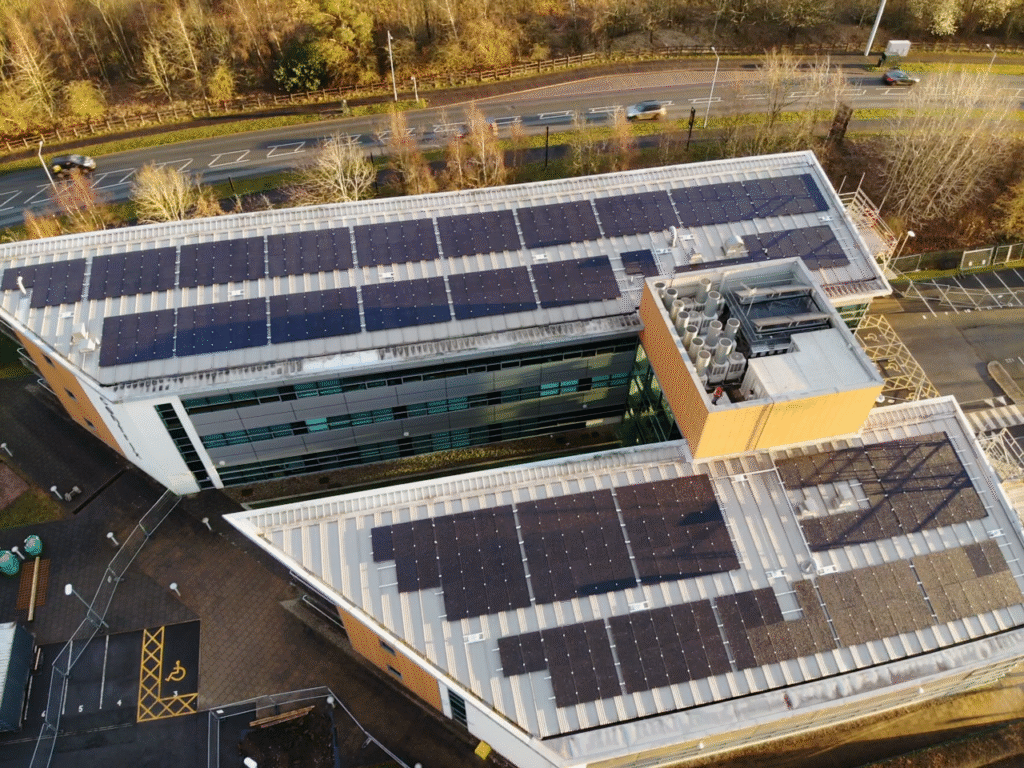
Our team designed and installed a solar PV system for the property investment company’s Centrix @ Keys Business Village, a three-storey serviced office centre in Staffordshire. The system will help lower carbon emissions, as well as reduce energy costs.
Northern Trust, which has an existing property portfolio extending to 9 million sq ft of industrial, trade counter and office parks, has also invested in an energy-efficient air source heat pump system, as well as LED light fittings incorporating intelligent controls to further reduce energy usage.
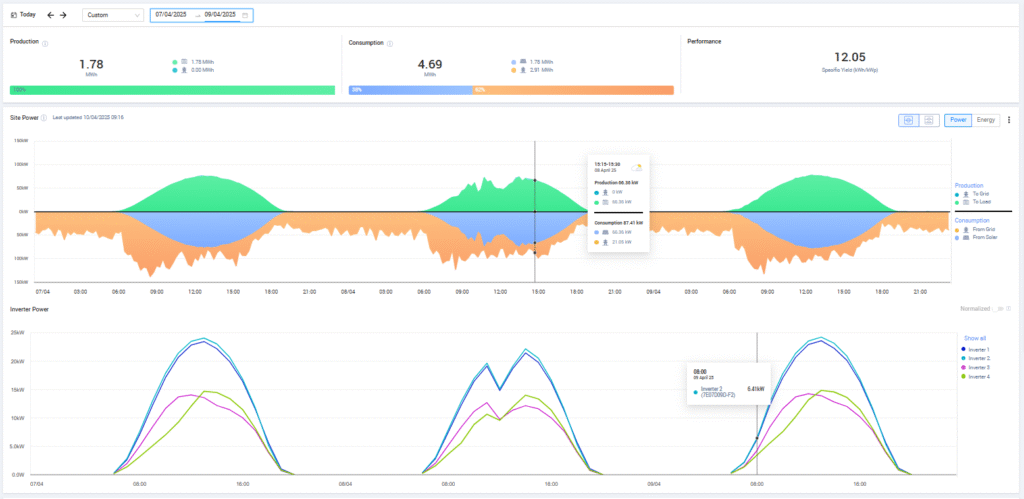
Installation performance data
Jon Kemp, Thompsons Solar’s solar director, said: “We’re thrilled to partner with Northern Trust on this initiative. By installing a high-performance solar PV system, we’re helping Centrix @ Keys Business Village make a significant step towards sustainability.
“This installation will not only lower carbon emissions but also contribute to a more resilient and cost-effective energy strategy for the property.”
Neil McManus, senior development executive at Northern Trust said: “We are dedicated to creating a more sustainable and efficient workspace for our tenants.
“These upgrades are a critical part of our long-term strategy to reduce our environmental impact while also delivering tangible benefits to our tenants in terms of energy savings and comfort. Centrix @ Keys Business Village is an important location for us, and we’re committed to making it a leader in sustainability.”